
A New Standard for Monitoring: Real-Time AI Detections Across Hundreds of Cameras With a 80% Drop in I/O Overhead
For ICONIC VMS, we turned fragmented AI alerts into a single command view—live detections, clear context, and an architecture that stays fast and affordable even as the camera count keeps growing.
Overview
Construction sites generate constant movement, constant uncertainty, and constant questions. ICONIC VMS had hundreds of cameras deployed across dozens of client locations, all feeding AI detections into Eagle Eye Networks (EEN). The problem was simple: EEN was never built to support enterprise-level aggregation. Each EEN account only exposes detection images to the company that owns the cameras — not to an external dispatch team overseeing multiple companies at once.
ICONIC VMS needed a new system — one that did not exist in any form — to give their internal dispatchers a real-time window into every site they manage. The vision was straightforward: a single screen where all detections from all companies appear instantly, clearly, and reliably. The execution required a new architectural approach altogether.
Leaping Logic designed and built the Alert Center, the first unified monitoring interface capable of aggregating AI detections across dozens of EEN accounts, delivering them in real time, and sustaining high alert volume without punishing the database or slowing the UI.
Challenges
Organizations with video surveillance face critical limitations:
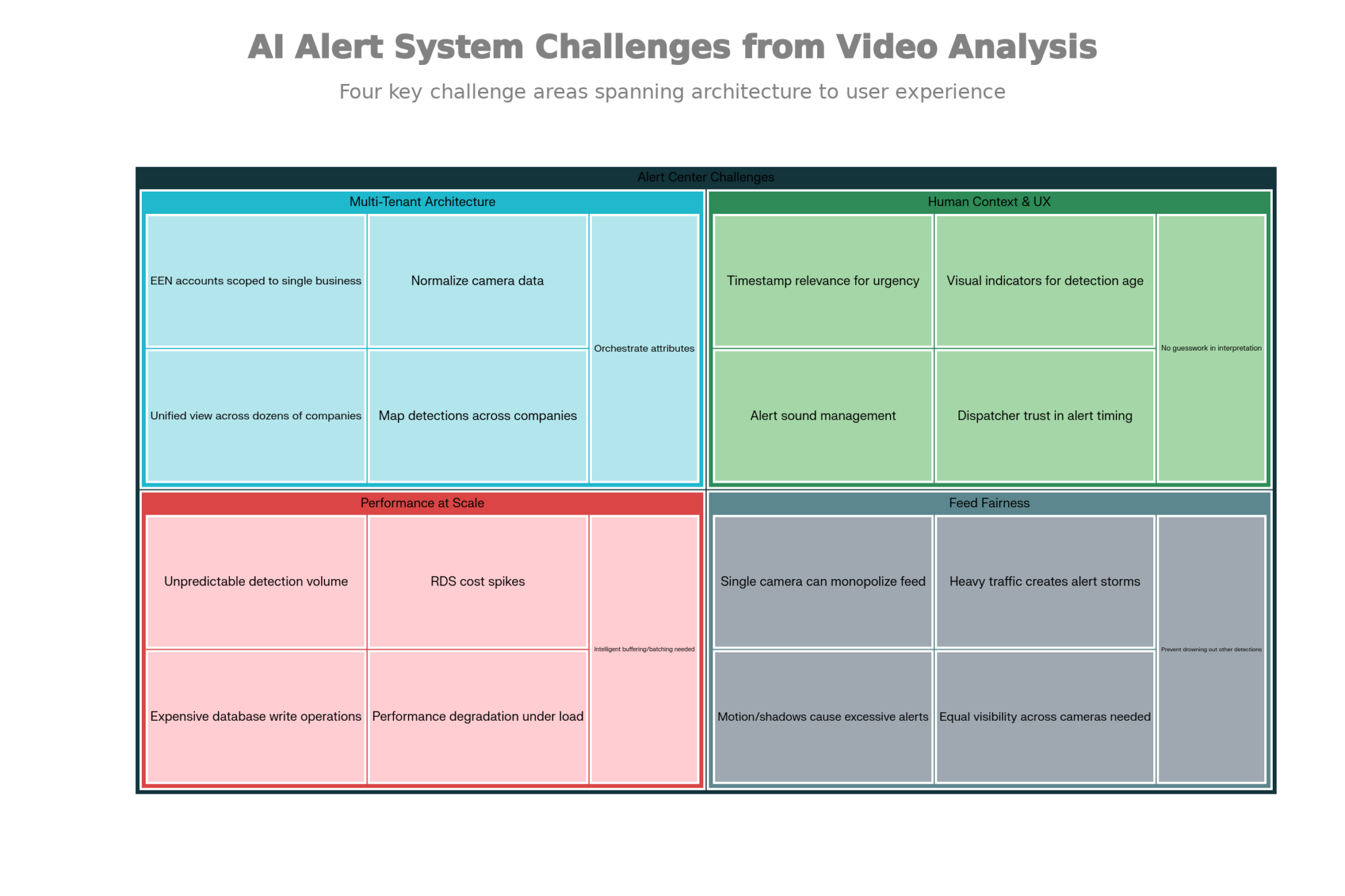
- Multi-Tenant Architecture: The fundamental constraint came from EEN’s underlying design. EEN’s AI detections operate within a single business account scope — they were never engineered to be aggregated across multiple unrelated organizations.
- Performance at Scale: Volume unpredictability created operational and cost crises that naive approaches couldn’t solve.
- Human Context and Dispatcher UX: Operational effectiveness depends entirely on human interpretation, and the system must provide clear, trustworthy context.
- Feed Fairness and Equal Visibility: A single problematic camera could completely overwhelm the alert stream, creating operational blind spots.
Solution
Leaping Logic developed a comprehensive AI video analysis platform:
Step 1: A Unified Detection Pipeline Built on Top of an App That Was Never Designed for Aggregation
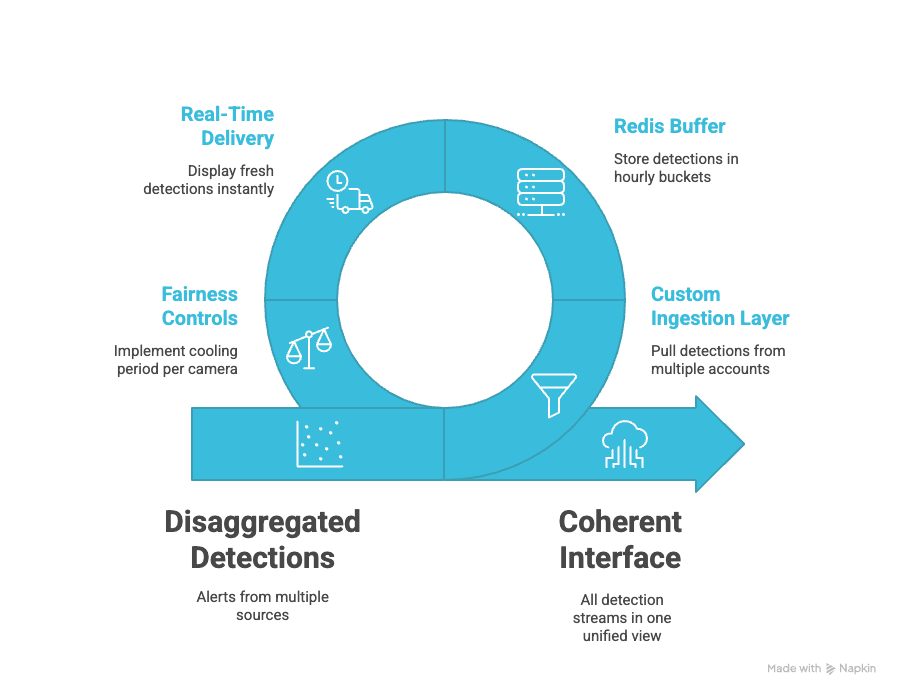
Leaping Logic engineered a custom ingestion layer capable of pulling detections from multiple EEN customer accounts — something the original system wasn’t built for. Every alert is enriched with additional context: which company it belongs to, which site, which camera, and what detection type it represents. This data normalization made it possible to render all detection streams in one coherent interface.
Step 2: Redis as the Nervous System
To avoid the heavy cost of writing each detection to RDS in real time, Redis became the real-time buffer. Every detection is stored in an hourly Redis “bucket,” allowing the Alert Center UI to display alerts instantly without touching the database. Only once per hour do we flush all events into the database in batches — cutting I/O costs dramatically while keeping long-term history intact.
Step 3: Real-Time Delivery That Dispatchers Can Trust
A detection is only useful if the dispatcher knows *how fresh* it is. So the system logs two timestamps:
- when EEN generated the detection
- when our system received and displayed it
Step 4: Fairness Controls: Cooling Logic to Prevent Alert Flooding
To ensure one camera doesn’t dominate the feed, we implemented a cooling period per camera. Even if a camera fires dozens of detections in seconds, only a manageable cadence flows into the Alert Center. This allows every camera — and therefore every site — to be represented fairly.
Results
The Alert Center transformed how ICONIC VMS’ internal team monitors their deployments. Instead of scattered information, they now have a single operational view. Instead of guesswork, they have context. Instead of database strain, they have predictable hourly writes. Instead of lopsided camera flooding, they have balanced visibility. What began as an architectural experiment has become one of the most consistently used tools within the ICONIC VMS ecosystem.
Why This Approach Works
The power of the Alert Center lies in its architecture. By separating real-time responsiveness from database durability, Leaping Logic delivered a system that feels instantaneous to humans without punishing the infrastructure behind it.
Redis handles the speed. RDS handles the history. WebSockets handle the experience. Cooling logic handles fairness. Normalized detection data handles multi-company complexity.
Every component exists for a reason.
Business Impact
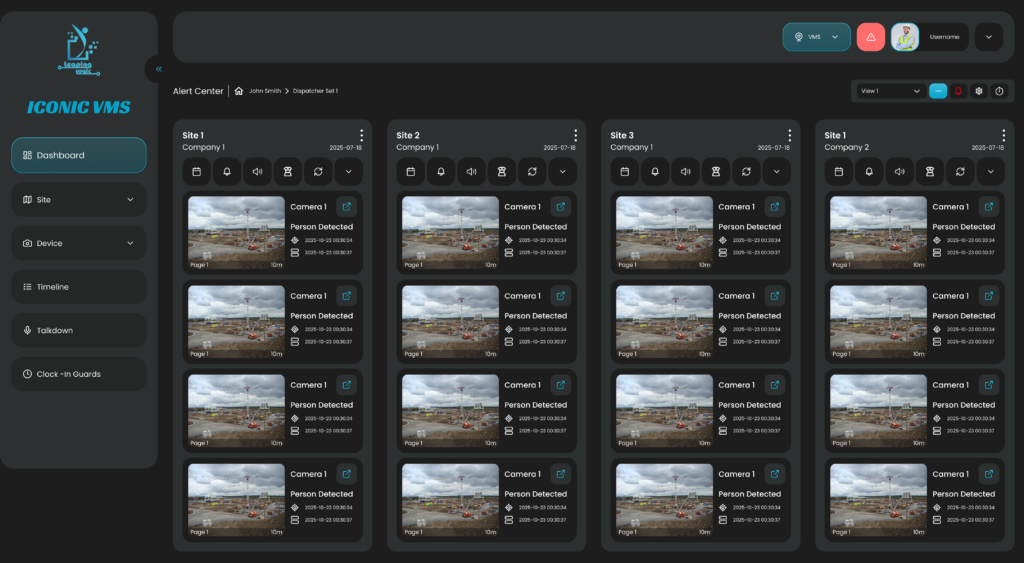
The Alert Center didn’t just fill a gap — it created a capability ICONIC VMS never previously had. Dispatchers now get a live, unified view of activity across all client sites, regardless of whose EEN account a camera belongs to. This has dramatically improved situational awareness and response times.
One dispatcher put it simply:
“Before the Alert Center, we had to hunt for events. Now the system brings everything to us, clearly and instantly.”
The value isn’t in the number of alerts. It’s in how readable, trustworthy, and actionable they’ve become.